Loading…
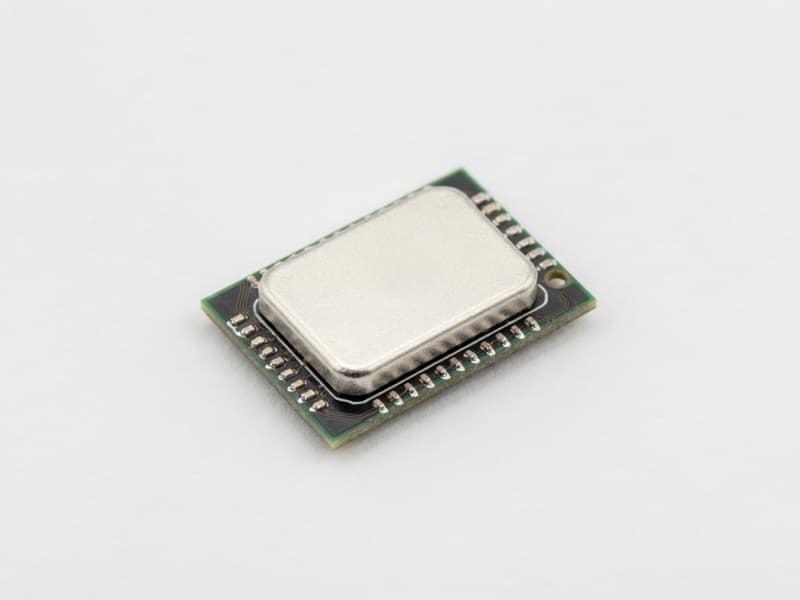
SMD-38 Module · ESP32-WROOM-32
ActiveWi-Fi + Bluetooth SoC Module
ESP32-WROOM-32
Espressif Systems · SMD-38 Module · Wi-Fi + Bluetooth SoC Module
Price on Request
Get a competitive quote within 24 hours. Volume discounts available. Shenzhen stock ships in 1-2 business days.
Overview
The ESP32-WROOM-32 is the module that made dual-radio IoT cheap: an 18 x 25.5 x 3.1 mm shielded carrier containing the ESP32-D0WDQ6 SoC, a 40 MHz crystal, 4 MB of SPI flash, balun, RF matching, an on-board PCB antenna and 38 castellated pads. Inside, the SoC provides two Xtensa LX6 32-bit cores clocked up to 240 MHz, 520 KB of SRAM, 448 KB of ROM, an ultra-low-power coprocessor for always-on sensor wake-up, IEEE 802.11 b/g/n Wi-Fi at up to 150 Mbps on 2.4 GHz (2412-2484 MHz channels) and Bluetooth 4.2 with both BR/EDR and BLE. Up to 32 GPIO are exposed, along with capacitive touch sensing, 12-bit ADC channels, DACs, I2S, SPI, I2C, UART, SDIO, LED and motor PWM, and a TWAI controller compatible with CAN 2.0.
Designers should treat power and layout as first-order problems. The module needs a clean 3.0 V to 3.6 V supply capable of several hundred milliamps of transient current during Wi-Fi transmit bursts (TX peaks around 19.5 dBm in 802.11b mode), and the datasheet specifies -40 C to +85 C ambient. The PCB antenna requires a keepout area and no copper or ground pour under it, and the castellated pads need a matched footprint with correct paste stencil apertures to avoid tombstoning or lifted shields. Note also that Espressif marks the plain ESP32-WROOM-32 as not recommended for new designs in current documentation and steers new sockets to the ESP32-WROOM-32E (updated ECO V3 die with improved RF), the -32D or the -32U with an external antenna connector - all footprint-compatible, so you can migrate without a layout change.
Counterfeit and clone modules are the biggest risk on this part. The market contains modules assembled with second-hand or lower-grade ESP32 dies, 2 MB flash remarked as 4 MB, uncertified antenna layouts and copied laser marking. Verification is simple and should be done on every incoming lot: run esptool.py chip_id and flash_id to confirm the ESP32-D0WDQ6 and 4 MB flash, check that the MAC address falls in an Espressif OUI block, compare physical dimensions and shield marking against the official datasheet drawing, and confirm the module carries the certification labels (FCC/CE/SRRC) your product claims to inherit. MOQ is one reel (typically 650 or 700 pcs depending on packaging) or 50 pcs loose for prototyping; Shenzhen stock normally ships in 1-2 days.
Key Features
- Dual-core Xtensa LX6 at up to 240 MHz with 520 KB SRAM and 4 MB SPI flash
- Wi-Fi 802.11 b/g/n up to 150 Mbps plus Bluetooth 4.2 BR/EDR and BLE on one antenna
- Fully shielded module with PCB antenna, crystal, balun and RF matching pre-certified
- Up to 32 GPIO, 12-bit ADC, touch sensing, I2S, SDIO, TWAI (CAN) and PWM peripherals
- 38 castellated pads in 18 x 25.5 x 3.1 mm, 3.0 V to 3.6 V supply, -40 C to +85 C
Typical Applications
- Smart-home devices, plugs, switches and lighting controllers
- Wi-Fi sensor nodes and MQTT telemetry gateways for industrial monitoring
- Audio streaming, internet radio and Bluetooth speaker products
- Wearable and battery devices using the low-power coprocessor wake paths
- Retrofit modules that add Wi-Fi and BLE to existing MCU boards over UART/SPI
Specifications
- Wireless Standard
- Wi-Fi 802.11 b/g/n + Bluetooth 4.2 (BR/EDR and BLE)
- Frequency Band
- 2.4 GHz ISM (2412 to 2484 MHz)
- Core
- Dual-core Xtensa LX6
- Max Clock
- 240 MHz
- Flash
- 4 MB
- Antenna
- On-board PCB antenna
- VCC
- 3.0 to 3.6 V
- TX Power (802.11b)
- 19.5 dBm
- Pins
- 38
- RoHS
- Compliant
Procurement Tips
Specify the exact module revision (for example ESP32-WROOM-32E with 4 MB flash) on the BOM and require an esptool flash_id report per lot - clone modules with 2 MB flash fail OTA updates in the field rather than at incoming inspection.
Frequently Asked Questions
What is the difference between ESP32-WROOM-32, -32D, -32E and -32U?
All share the same 38-pad footprint and pinout. -32 is the original with the ESP32-D0WDQ6 die and a PCB antenna; -32D is functionally similar with a single-antenna design; -32E uses the newer ECO V3 silicon with improved RF performance and is the Espressif recommendation for new designs; -32U replaces the PCB antenna with an IPEX connector for an external antenna. Choose -32E for new sockets and -32U for metal enclosures.
How much current does an ESP32-WROOM-32 design need from its 3.3 V rail?
Plan for peaks well above the average. Wi-Fi transmit bursts at 19.5 dBm push the module toward several hundred milliamps, so a rail rated only 150 mA will brown out during association. Use a regulator rated 500 mA to 1 A with low output impedance, at least 10-22 microfarads of bulk capacitance plus 100 nF at the module VCC pad, and short, wide power traces.
Do I need to re-certify my product if I use this pre-certified module?
Using an Espressif-certified module lets you inherit its RF certification for many schemes, which saves significant cost and time, but you are still responsible for the final product: antenna keepout must be respected, the host PCB must not detune the antenna, and regulatory limits for spurious emissions apply to the finished assembly. Confirm the certificate numbers listed by Espressif for the exact module revision you buy.
Can the ESP32-WROOM-32 replace an ESP-12F (ESP8266) design?
Not as a drop-in. The pinouts and pad counts differ, and the ESP32 needs a different SDK (ESP-IDF instead of the ESP8266 RTOS SDK), although Arduino core code ports with modest changes. You gain dual cores, Bluetooth, more RAM and better security. If you want an easier migration path from ESP8266, look at the ESP32-C3-MINI-1, which Espressif positions as the ESP8266 successor.
How do I identify counterfeit ESP32-WROOM-32 modules?
Run esptool.py chip_id and flash_id: a genuine module reports an ESP32-D0WDQ6 and 4 MB (32 Mbit) flash. Check that the MAC OUI belongs to Espressif, measure the module against the official 18 x 25.5 x 3.1 mm drawing, inspect the shield-can laser marking font and date code, and confirm the antenna keepout region matches the reference layout. Fake modules commonly hide 2 MB flash, weaker transmit power and uncertified antennas.
What is the MOQ and lead time?
Prototype MOQ is 50 pcs loose; production is normally one reel (about 650-700 pcs depending on packaging) or multiples thereof. Espressif authorised lead time is typically 4-8 weeks. Our Shenzhen stock usually dispatches in 1-2 business days for up to 20,000 pcs, and we can supply lot codes plus an esptool verification report.
Alternatives & Equivalents
RP2040
Raspberry Pi
alternative
ESP-12F
Espressif Systems
alternative
ESP32-C3-MINI-1
Espressif Systems
alternative
W5500
WIZnet
alternative
Need ESP32-WROOM-32 pricing and availability?
Submit an RFQ — we reply within 24 hours with stock, pricing, lead time and packaging options.
Request a Quote →