Loading…
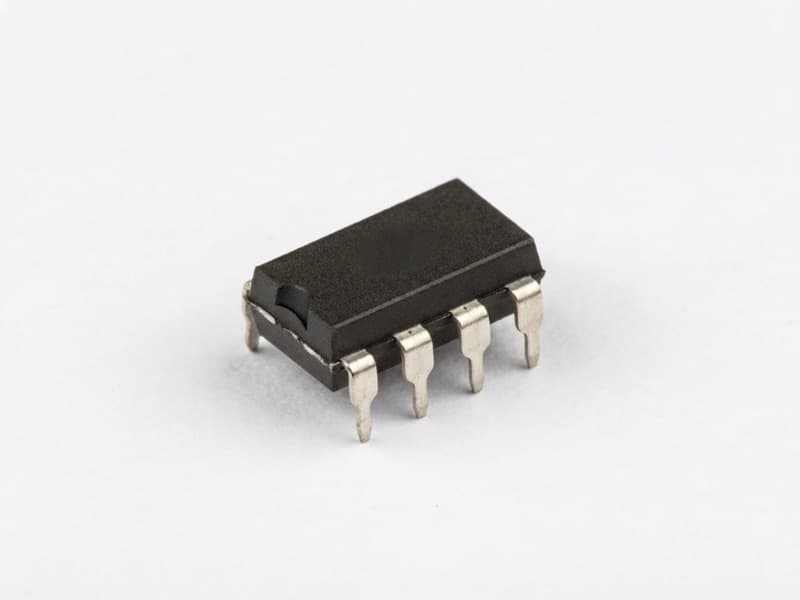
SOP-8 / DIP-8 · LM358
ActiveOperational Amplifiers
LM358
Texas Instruments · SOP-8 / DIP-8 · Operational Amplifiers
Price on Request
Get a competitive quote within 24 hours. Volume discounts available. Shenzhen stock ships in 1-2 business days.
Overview
The LM358 is one of the most widely deployed dual operational amplifiers in the industry, and for good reason: it combines two independent, high-gain, internally frequency-compensated amplifiers in a single 8-pin package while drawing only a few hundred microamps of supply current. Unlike many op-amps that require symmetrical rails, the LM358 was designed from the ground up for single-supply operation between 3V and 32V, and its common-mode input range extends to ground (V-), which lets you sense small signals referenced to the negative rail without a charge pump or negative supply. This is exactly why it became the default choice for sensor front-ends, current-shunt amplifiers, and battery-powered instrumentation.
Inside each amplifier you get a typical gain-bandwidth product of 1.2 MHz and a slew rate of about 0.5 V/µs, which places it firmly in the "general-purpose DC to low-audio-frequency" category. It is not a precision part — input offset voltage can reach 7 mV over temperature on the standard grade — but for closed-loop gains of 10 to 100 with a stable reference, that error is often acceptable and can be trimmed out in firmware if needed. Output stage is a classic Class-AB with NPN pull-up and current-source pull-down, so the output can swing close to ground (a few millivolts) but needs at least 1.5 V of headroom to the positive rail; if you need rail-to-rail output, look at the LMV358 or TLV2372.
For B2B sourcing, the LM358 is available from Texas Instruments (LM358A, LM358B grades for tighter offset), STMicroelectronics (LM358ST), onsemi, and many Asian second sources. All are pin-compatible and functionally equivalent, but the electrical spec sheet differs — TI's "B" grade offers 1 mV max Vos at 25 °C versus 7 mV for the standard part. Choose based on your accuracy budget rather than price alone. Shenzhen stock is deep, MOQ typically 2,500 pcs on tape-and-reel for the SOP-8 version.
Key Features
- Single-supply operation from 3 V to 32 V — no negative rail required
- Common-mode input range includes ground for low-side current sensing
- Low supply current: 0.7 mA typ per amplifier, independent of supply voltage
- Available in SOP-8 and DIP-8 with drop-in pin compatibility across vendors
Typical Applications
- Sensor signal conditioning (thermocouples, load cells, photo-diodes)
- Low-side current shunt amplification in battery chargers and motor drivers
- DC gain blocks and active filters in audio and industrial controls
- Voltage references and comparators with hysteresis
- Portable instrumentation running from a single Li-ion or 3×AA cell
Specifications
- Number of Channels
- 2
- Supply Voltage (Single)
- 3 to 32 V
- Gain Bandwidth Product
- 1.2 MHz
- Slew Rate
- 0.5 V/µs
- Input Offset Voltage
- 2 mV
- Operating Temperature
- 0 to 70 °C
- Mounting Type
- Surface Mount / Through Hole
- Pins
- 8
- RoHS
- Compliant
Procurement Tips
For mass production, specify the exact vendor and grade (e.g. TI LM358AIDR) on your BOM to avoid receiving a second-source part with wider offset tolerance. Ask us for the C-of-C (Certificate of Conformance) and reel photos before dispatch.
Frequently Asked Questions
What is the difference between LM358, LM358A and LM358B?
All three share the same pinout and package. The suffix indicates input offset voltage grade: standard LM358 has ±7 mV max at 25 °C, LM358A has ±3 mV, LM358B has ±1 mV. Higher grade costs more but reduces DC error in precision circuits.
Can I replace LM358 with LM2904?
Yes, in almost every case. LM2904 is the industrial-temperature version (-25 °C to +85 °C) with essentially identical electrical specs. LM358 is specified for 0 °C to 70 °C only. Use LM2904 in outdoor, automotive-cabin or industrial enclosure applications.
Is the LM358 rail-to-rail?
No. The input common-mode range reaches the negative rail but stops about 1.5 V below the positive rail. Output swings to within a few millivolts of ground but needs 1.5 V of headroom to V+. If you need true rail-to-rail I/O, use LMV358 (RRIO) or TLV2372.
What is the minimum supply voltage for LM358?
3 V is the datasheet minimum. Below that the internal bias current sources stop regulating and gain-bandwidth collapses. For 1.8 V or 2.5 V rails choose a low-voltage op-amp such as TLV9002 or MCP6002.
How do I identify counterfeit LM358 chips from Shenzhen brokers?
Check the laser-etched TI logo (should be crisp, not printed ink), verify the date code against TI's online date-code checker, measure input offset voltage on a sample (a real LM358B stays under 1 mV, clones often exceed 5 mV), and inspect the pin plating under magnification for uniform matte tin rather than shiny re-plated leads. We X-ray and electrically test every reel we ship.
What is the MOQ and lead time from your Shenzhen warehouse?
MOQ is 1 reel (2,500 pcs SOP-8) for stock items, or 100 pcs loose for prototyping. Lead time is 1-2 days for parts in local stock, 5-10 days for TI authorized channel replenishment.
Does the LM358 work as a comparator?
It can, but it is not optimized for that role. Open-loop propagation delay is around 200 ns with large overdrive and much worse with small overdrive, and the output cannot sink current from a pull-up to a different logic rail. For anything faster or cleaner, use the LM393 dual comparator, which is pin-compatible in most cases.
Alternatives & Equivalents
LM2904
Texas Instruments
equivalent
LM324
Texas Instruments
alternative
LM393
Texas Instruments
companion
NE5532
Texas Instruments
upgrade alternative
Need LM358 pricing and availability?
Submit an RFQ — we reply within 24 hours with stock, pricing, lead time and packaging options.
Request a Quote →